Word-for-word Quran meaning
Understand the meaning of individual Arabic words, beginning with the most frequent Quranic vocabulary and building systematically through each surah.
Our online Quran Translation course changes recitation from a language you only hear into guidance you understand: word by word, surah by surah, in clear English or Urdu with a certified scholar.
What is Tarjuma?
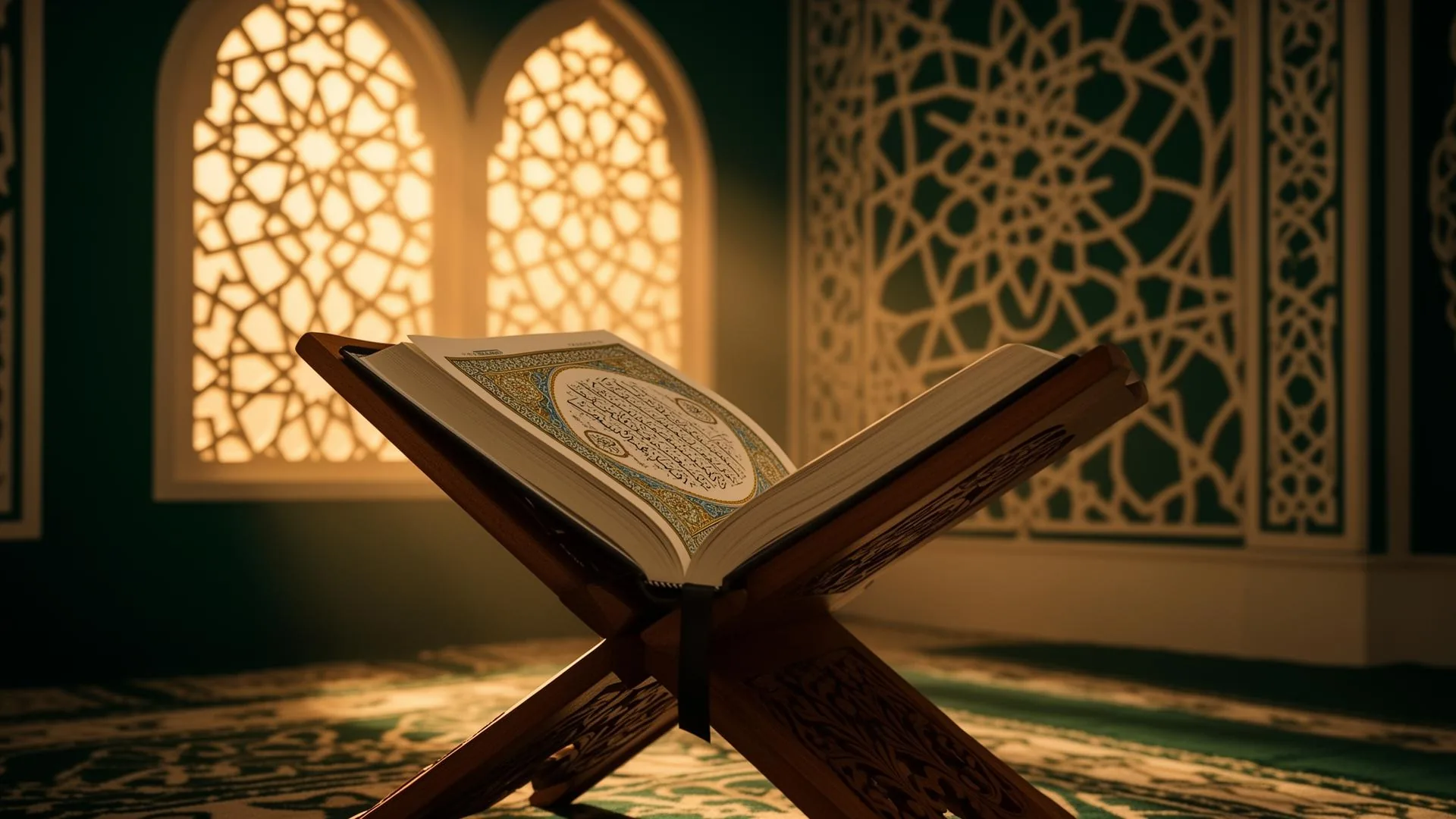
Tarjuma means translation. In Quranic education, it means learning the meaning of every verse word by word, so when a Muslim stands in Salah and recites Al-Fatiha, they know what they are saying to Allah.
The Quran is not only a text to pronounce beautifully. It is the direct speech of Allah, sent as guidance for human life. Understanding it transforms the Quran from an obligation into a living relationship with Allah's words.
Nūr Academy uses a word-for-word method, the same approach found in traditional madrasah Tarjuma lessons, so students build genuine Quranic vocabulary over time.
ٱلْحَمْدُ لِلَّهِ رَبِّ ٱلْعَـٰلَمِينَ
All praise is for Allah, Lord of all the worlds. - Al-Fatiha 1:2
Word-by-word breakdown
This is how every verse is taught: one word at a time, meaning by meaning.
Quran Tarjuma is direct, word-for-word translation. Tafseer is deeper exegesis covering reasons for revelation, scholarly opinions, linguistic analysis and legal rulings. Arabic language study teaches grammar and composition. Tarjuma gives students the essential first step: clear access to the meaning of the Quran.
Course content
Students learn more than translated sentences. They learn vocabulary, themes, context, prayer connection and practical guidance.
Understand the meaning of individual Arabic words, beginning with the most frequent Quranic vocabulary and building systematically through each surah.
Before translating verse by verse, students learn the overall purpose of each surah so every ayah is understood as part of a coherent message.
Asbab al-nuzul is introduced where it is essential, turning abstract commands into guidance with a clear human setting.
Students gradually recognize recurring Quranic words on sight, depending less on translation and understanding the Arabic more directly.
Each surah is linked to prayer, so students understand what they recite to Allah in Fajr, Maghrib, Isha and every daily rakat.
Teachers draw out lessons about patience, gratitude, family, accountability and character so the Quran shapes real daily decisions.
The transformation
Salah becomes present rather than habitual. Ramadan recitation becomes accompanied by understanding. Hardship is met with the words Allah actually revealed about it.
Before Tarjuma
Reciting Al-Fatiha in every rakat without knowing you are asking Allah to guide you to the straight path.
After Tarjuma
Standing in Salah consciously praising Allah, seeking His mercy and asking for guidance with awareness.
Before Tarjuma
Hearing Surah Al-Asr and sensing its importance without knowing the qualities Allah names as the escape from loss.
After Tarjuma
Recognizing belief, righteous action, truth and patience as the four qualities Allah names in that surah.
Curriculum stages
The course begins with the surahs every Muslim already recites, then progresses toward a complete Quran translation journey.
Stage 1 - Foundation
Start with Al-Fatiha, Al-Ikhlas, Al-Falaq, An-Nas, Al-Asr, Al-Kawthar and other surahs students already recite often.
3-4 monthsStage 2 - Essential Surahs
Study Surah Yasin, Al-Mulk, Al-Kahf, Al-Rahman, Al-Waqiah and key sections of Al-Baqarah with theme, context and verse meaning.
4-8 monthsStage 3 - Progressive Translation
Move systematically through the remaining juz. As vocabulary grows, each new portion becomes easier and more direct.
1-2 yearsStage 4 - Thematic Review
Trace Tawhid, prophethood, the Day of Judgement, mercy, justice, family and wealth across the Quran as a coherent whole.
2-4 monthsWho is this for?
Whether you have recited for decades or completed Hifz and want to understand what you memorized, this course meets you where you are.
For students who can read, recite or even memorize the Quran, but have never known what the words mean. No prior Arabic knowledge is required.
Tarjuma helps Hifz students recite meaning, not only words, and often strengthens retention because the verses become clearer in memory.
Families can learn together and bring Quranic meaning into home conversations, family prayers and everyday teaching moments.
Getting started
No prior Arabic is required. Every student starts with a free session that determines the right surah to begin with.
Choose a convenient time for a live one-on-one session with no payment or commitment.
Your teacher checks which surahs you already recite and selects the right place to begin.
A surah-by-surah plan is prepared, usually beginning with Juz Amma and daily Salah surahs.
Each session covers theme, word-by-word meaning, context, practical lessons and connection to Salah.
Why Nūr Academy
Understanding the Quran requires more than reading a published translation aloud. It requires a teacher who can explain, contextualize and answer questions.
Teachers are connected to the scholarship of Darul Uloom Karachi and the scholarly lineage of Mufti Taqi Usmani.
Students build Quranic vocabulary instead of only listening to a sentence-level translation being read aloud.
Understanding raises questions about meaning, context and application. In private lessons, those questions are answered immediately.
Students leave each lesson knowing what they are saying to Allah the next time they stand in prayer.
Sessions run across time zones for students in the US, UK, Canada, Australia, the Middle East and beyond.
Arabic words are introduced naturally through translation lessons; Arabic language study is not a prerequisite.
Student stories
"When my teacher translated Al-Fatiha word by word, I realized I had been asking Allah for guidance every day without knowing that was what I was asking."
Rashida M.
Birmingham, UK
"My son completed Hifz, then began Tarjuma. His retention improved because he is no longer reciting only words; he is reciting meaning."
Khalid A.
Houston, Texas
"Books never made it stick for me. One-on-one lessons with meaning, context and practical guidance finally made the Quran click."
Safia A.
Manchester, UK
Comparison
| Feature | Typical Course | Nūr Academy |
|---|---|---|
| Teaching method | Reading a published translation | Word-by-word Quranic vocabulary |
| Class format | Group, recorded or pre-set videos | Always one-on-one and live |
| Context of revelation | Rarely included | Taught where essential |
| Surah themes | Verse-only, no overview | Full surah theme before translation |
| Connection to Salah | Usually not addressed | Explicit link in every session |
| Questions | Forum or delayed response | Answered live in the lesson |
Questions
Everything you need to know before booking your first Quran Translation class.
Tarjuma is the direct translation of Quran verses, conveying the meaning of each word and sentence clearly in English or Urdu. Tafseer is deeper scholarly exegesis that explains reasons for revelation, linguistic subtleties, scholarly opinions and legal rulings. This course teaches Tarjuma with foundational contextual notes, making it an ideal foundation before formal Tafseer study.
No. The course is designed for students who do not understand Arabic. Instruction is in English or Urdu, while Quranic Arabic vocabulary develops naturally through the word-by-word method.
Yes. Many students find that understanding the meaning strengthens Hifz retention and improves presence during Tajweed and recitation. Translation can run in parallel on separate days.
It teaches the meaning of each individual Arabic word rather than only giving a sentence-level paraphrase. Over time, students recognize frequent Quranic words on sight and understand more directly.
Students typically complete Juz Amma within 3-4 months at 2-3 sessions per week. A full 30-juz translation track can take 2-3 years at that pace, though students usually feel a meaningful change within the first month.
Yes. Children who have completed Nazra and begun Salah are excellent candidates. Teachers adapt the explanation style to the student's age and level.
Teachers draw primarily on respected English and Urdu Quran translations and classical references, including Ma'ariful Quran, while keeping lessons accessible for modern students.
Related courses
Tarjuma pairs naturally with every Quran course and opens the door to deeper Islamic study.
Prerequisite
Students should be able to recite the Quran before beginning Translation. If you are still learning Arabic script, start here.
Learn morePairs beautifully with
Understanding what you memorize can make sabaq more meaningful and improve long-term retention.
Learn moreNatural next step
After Tarjuma, Tafseer opens deeper layers of revelation, scholarship, linguistic nuance and application.
Learn moreComplements translation
Correct recitation and clear understanding together transform how a Muslim stands in Salah.
Learn moreأَفَلَا يَتَدَبَّرُونَ ٱلْقُرْءَانَ
In a free 30-minute session, your teacher can translate the opening verses of Al-Fatiha word by word, so you begin to understand what you say to Allah in every Salah.